25 Years On: The $399 Player That Put 1,000 Songs in Your Pocket
The 2001 launch of the original iPod reshaped the portable audio market by combining a 5GB hard drive with seamless Mac integration, a feat competitors had failed to achieve.
By Marcus Johnson ·
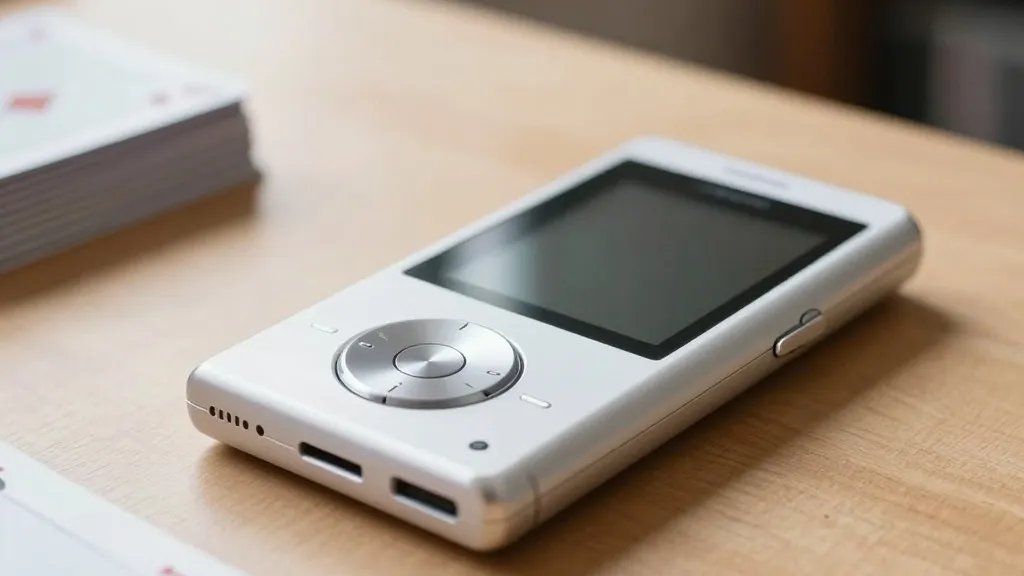
Exactly 25 years ago today, Apple CEO Steve Jobs unveiled a device that would redefine how consumers interacted with digital media. The original iPod, priced at $399, was not merely another gadget; it was a strategic pivot for a company that had recently weathered the dot-com bubble burst. By launching this product in October 2001, Apple demonstrated that it had successfully moved beyond its earlier beige-era hardware, establishing a foothold in the portable entertainment space just as the Mac OS X era was taking hold.
The significance of this announcement lies in its timing and execution. At the time, the portable music player market was fragmented among established names like Sony, Creative, and Sonic Blue, as well as various smaller firms. Jobs acknowledged that these competitors had failed to find the right formula for digital music. While four types of portable solutions existed—CD players, MP3 CD players, flash players, and hard disk-based jukeboxes—Apple identified the hard drive-based model as the optimal entry point. This decision allowed the company to offer a capacity that other formats could not match at the time.
The core selling proposition was simplicity: a device that could hold a user’s entire music library in their pocket. With 5 gigabytes of storage, the player could accommodate approximately 1,000 songs, specifically defined as typical pop-length MP3s encoded at 160Kbps. For the average consumer in 2001, this capacity represented their complete collection. This was a massive leap from the limited tracks possible on earlier flash-based devices or the physical constraints of CD-based players.
Achieving this capacity in a compact form factor was a technical achievement made possible by a partnership with Toshiba. The device utilized a 1.8-inch diameter hard drive that was only 0.2 inches thick. This component allowed Apple to design a unit measuring 2.4 by 4 by 0.78 inches, roughly the size of a standard deck of playing cards. Weighing just 6.5 ounces, the player was marketed as being lighter than most cell phones of the era, a critical feature for a device intended to be carried daily.
Beyond raw storage, the device’s connectivity was a key differentiator. Apple equipped the iPod with a FireWire 400 port, which was significantly faster than the USB connections common at the time. Jobs claimed that transferring an entire CD’s worth of MP3 data would take only five to 10 seconds via FireWire, compared to roughly five minutes over USB. This speed meant that filling the device with its full 1,000-song capacity could be done in about 10 minutes, whereas a USB-based player might require five hours for the same task.
The user interface was designed to minimize friction, featuring a single-hand-friendly control scheme centered on an accelerated scroll wheel. This wheel used a piezoelectric clicker to provide tactile feedback, allowing users to navigate playlists, artists, or specific songs quickly. The design philosophy emphasized durability and minimalism, with Jobs highlighting the device’s “legendary ease of use.” During the initial demonstration, the first song played was “Building a Mystery” by Sarah MacLachlan.
Power management was also a focal point of the launch. The device included a rechargeable lithium-polymer battery capable of 10 hours of continuous playback. Apple stated that the battery could be recharged to 80 percent in just one hour, ensuring that users could quickly top up their device when needed. This combination of long playtime and fast charging addressed common pain points in portable electronics of the early 2000s.
Crucially, the hardware was tightly integrated with software. The launch coincided with the release of iTunes 2, which introduced Auto-Sync functionality. This feature ensured that the digital libraries curated on a Mac were automatically mirrored to the iPod whenever the device was connected for charging or data transfer. The iPod also functioned as a FireWire hard disk drive, adding versatility to its primary role as a music player. This ecosystem approach was central to Jobs’ vision of the Mac as the hub for a user’s digital lifestyle.
The original iPod served as the foundation for a product line that would dominate the market for nearly two decades. While the first iPhone did not appear until early 2007, the iPod remained a staple of the Apple product stack for over a decade. Its influence began to wane as smartphones matured, with the final model, the 7th-generation iPod Touch, released in May 2019. Although the line was left unmaintained for a few years, it was officially discontinued in May 2022, marking the end of an era that began with that single, card-sized device in 2001.
Source: Tom's Hardware